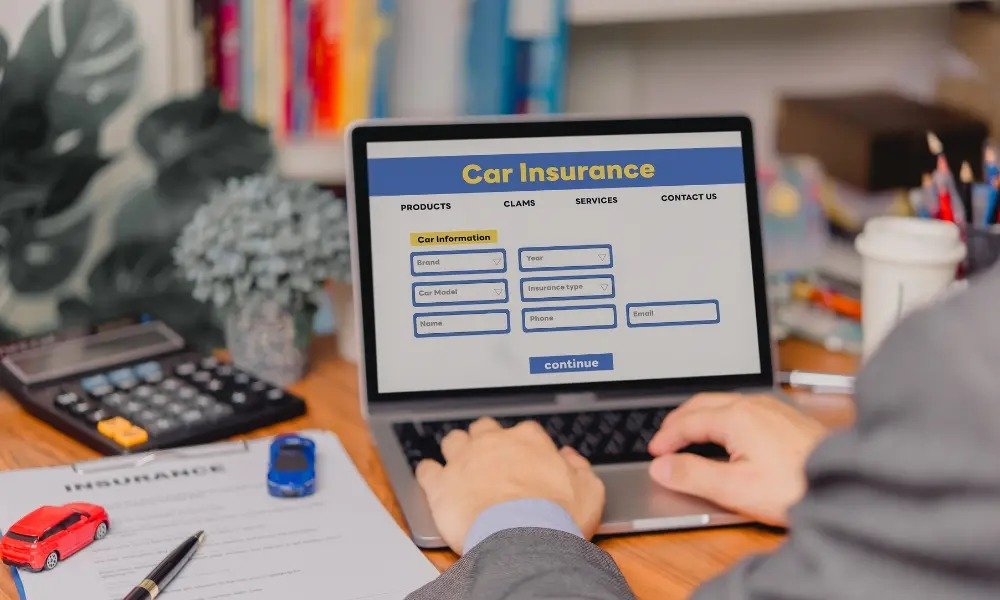

Car insurance is a legal requirement in most countries, but paying too much for it, or too little for what you actually need, is entirely avoidable. At Ask About Cars, we want to help you navigate the insurance market with clarity and confidence, so you end up with genuine protection at a fair price.

This guide covers everything from understanding coverage types to the specific actions you can take today to reduce your premium without compromising your protection.
Understanding the Types of Car Insurance Coverage
Car Insurance Coverage Types — What’s Included
| Coverage Type | What It Covers | Best For |
|---|---|---|
| Third-Party Only (TPO) | Damage you cause to other people’s vehicles and property | Any car is worth protecting financially |
| Third-Party, Fire & Theft | TPO + your car if stolen or damaged by fire | Mid-value cars in higher-theft areas |
| Comprehensive | All of the above + damage to your own car (including accidents, weather, vandalism) | Any car is worth protecting financially |
| Usage-Based / Telematics | Premium calculated from actual driving behaviour via app or device | Low-mileage or very careful drivers |
Note: The safety features in your car directly affect your insurance costs. Vehicles with ABS, AEB, and ESC typically attract lower premiums. Read our guide to car safety features to understand which systems deliver the biggest insurance benefits.
1. Shop Around Every Single Year
Loyalty rarely pays in the insurance market. Insurers frequently offer their best rates to new customers, meaning long-term policyholders often pay significantly more than new policyholders for identical coverage.
Set a calendar reminder one month before your renewal date to compare at least five quotes. Use comparison websites as a starting point, then call insurers directly, as they often have additional discounts not shown on comparison sites.
2. Bundle Your Policies
Most insurers offer meaningful discounts when you hold more than one policy with them. Car plus home insurance is the most common combination. The discount for bundling typically ranges from 5–15%, and it simplifies your payments too.
3. Maintain a Clean Driving Record
Every claim and every conviction affects your premium for three to five years. The inverse is also true: a clean, multi-year no-claims history qualifies you for significant no-claims discounts and preferred risk pricing. Knowing how to navigate road hazards safely and keeping your vehicle well-maintained reduces your accident risk meaningfully.
4. Increase Your Excess (Deductible) Strategically
Your excess is the amount you pay out of pocket before your insurer covers the rest of a claim. Increasing your voluntary excess reduces your premium because you’re accepting more of the financial risk personally. However, only increase your excess to a level you can genuinely afford to pay in an emergency.
- A $500 voluntary excess typically reduces premiums by 10–20%
- A $1,000 excess can reduce premiums by 20–35%, depending on the insurer
- Never set an excess higher than your accessible emergency savings
5. Ask Specifically About Every Discount Available
Insurers offer discounts that they don’t always advertise prominently. Always ask specifically about:
- No-claims discount (and whether it’s protected)
- Low annual mileage discount
- Occupation-based discounts (certain professions attract lower risk ratings)
- Membership discounts automobile clubs, employer schemes, and alumni associations
- Advanced driving qualification discounts
- Safety feature discounts particularly for vehicles with AEB, dash cameras, and immobilisers. See our car safety features guide for the full list of features that reduce risk
6. Complete an Advanced Driving Course
Accredited advanced driving courses reduce your statistical risk in the eyes of insurers. Many insurers will apply a discount immediately upon seeing a Pass Plus or IAM RoadSmart certificate. The course cost is often recouped within one policy year through the discount.
7. Reconsider Full Coverage on Older Vehicles
If your car has depreciated to a point where its market value is close to or less than your annual comprehensive premium, the mathematics of comprehensive cover no longer add up. At that point, third-party fire and theft provides the legally required protection at a far lower cost. Our guide to maximizing your car’s resale value can help you accurately assess your car’s current market value.
8. Install Approved Security Devices
Insurers reduce premiums for vehicles with approved immobilisers, Thatcham-rated alarms, steering wheel locks, and GPS trackers. A vehicle that is harder to steal costs the insurer less in theft claims. Make sure any device you install is on your insurer’s approved list; not all devices qualify for a discount. A well-maintained car is also a lower-risk car from an insurer’s perspective. See our car maintenance guide for the habits that reduce your mechanical risk profile.
9. Consider Telematics or ‘Black Box’ Insurance
Telematics insurance uses a small device in your car or a smartphone app to monitor your actual driving behaviour, speed, cornering, braking, and time of day. If you drive carefully and not excessively late at night, telematics can dramatically reduce your premium compared to standard demographic-based pricing.
This type of policy is particularly valuable for young drivers, who face high demographic-based premiums regardless of their actual driving quality.
10. Review Your Policy Before Every Renewal
Your circumstances change. Perhaps you’ve moved to a safer postcode, paid off your car, reduced your annual mileage, or added a security device. None of these changes are applied automatically by your insurer you must inform them and request a revised quote.
- Update your annual mileage estimate accurately; overestimating increases your premium
- If you’ve bought a hybrid, inform your insurer hybrids often attract lower premiums due to lower average speeds and safer driver profiles. Read more in our hybrid car guide
- Remove named drivers who no longer use the vehicle; each additional driver adds risk
Quick-Reference: Actions That Reduce Car Insurance Premium
|
Action
|
Typical Premium Impact |
Difficulty
|
|---|---|---|
| Shop around at renewal | Up to 40% saving vs auto-renewal | Easy — 30 mins online |
| Increase voluntary excess | 10–35% reduction | Easy — instant online |
| Build a no-claims history | Up to 70% discount for 5 years | Long-term — drive carefully |
| Bundle with home insurance | 5–15% discount | Easy — one call |
| Install approved tracker/alarm | 5–20% discount | Moderate — installation required |
| Switch to a telematics policy | 5–15% discount | Moderate — 1–2 days |
| Maintain a safe driving record | Up to 50% for careful drivers | Easy — ongoing habit |
Conclusion
Car insurance doesn’t have to feel like a tax you pay and forget. The drivers who pay the least for the best coverage are simply the ones who actively manage their policy every year. Take one hour before your next renewal to compare quotes, ask about discounts, and review your excess level. The savings are often substantial. For more money-saving and vehicle care advice, visit Ask About Cars and explore our related guides on car maintenance, road hazard protection, and maximizing your car’s resale value.