
No matter how experienced you are, the road is full of unpredictable hazards. At Ask About Cars, we believe preparation is your greatest tool. Knowing what to watch for and how your car should be equipped to handle it is the difference between a minor inconvenience and a serious incident.

Here are the five most common road hazards every driver encounters, with practical strategies to protect yourself and your vehicle.
1. Potholes
Potholes are arguably the most widespread road hazard in the world. They form when water seeps under the road surface, freezes, and expands, then weakens the asphalt above. Hitting a pothole at speed can damage tyres, bent wheel rims, misalign your suspension, and in severe cases, crack components underneath the car.
How to Protect Your Car
- Keep your eyes well ahead on the road, spotting a pothole from 50+ metres gives you time to slow or avoid it
- Maintain correct tyre pressure, properly inflated tyres absorb impact far better than under-inflated ones
- If you can’t avoid a pothole, release the brakes just before hitting it; braking into a pothole transfers more force into the wheel
- After a significant pothole impact, check your tyres for bulges and have your alignment checked
Tyre pressure checks are covered fully in our essential car maintenance guide, a must-read for any driver who regularly encounters rough roads.
2. Wet and Icy Roads
Rain reduces your tyres’ grip on the road surface and significantly increases braking distances. Ice is even more dangerous because it can be nearly invisible (‘black ice’) and reduces traction to near zero. Both conditions demand a complete change in your driving approach.
How to Protect Your Car and Yourself
- Reduce speed, the Highway Code recommends doubling your stopping distance in wet conditions and multiplying it tenfold on ice
- Ensure tyre tread is above 3 mm for wet weather, and consider winter tyres if you live in a region with regular snowfall
- Use headlights in rain and fog; visibility is your first line of defence
- Make sure your car’s ABS and ESC are in working order, and review our guide on essential car safety features to understand how these systems assist you in low-grip situations
Stopping Distances at Various Speeds in Wet vs Dry Conditions
|
Speed
|
Dry Stopping Distance |
Wet Stopping Distance |
Increase
|
|---|---|---|---|
| 50 km/h | ~25 metres | ~40 metres | +60% |
| 80 km/h | ~53 metres | ~96 metres | +81% |
| 100 km/h | ~75 metres | ~135 metres | +80% |
| 120 km/h | ~105 metres | ~190 metres | +81% |
3. Road Debris
Fallen branches, loose cargo from trucks, scattered gravel, and tyre remnants (‘gators’) can appear with no warning. Driving over or swerving abruptly to avoid debris causes accidents and vehicle damage.
How to Protect Your Car
- Maintain a safe following distance. The further back you are, the more reaction time you have
- On motorways, drive in the centre lane where possible debris accumulates at the road edges
- After driving through scattered gravel or construction areas, inspect your windscreen, tyres, and undercarriage
- Consider a windscreen protection film if you frequently drive through construction zones
4. Animals Crossing the Road
Animal collision incidents occur thousands of times daily worldwide. In rural areas, deer, kangaroos, livestock, and dogs can appear suddenly in your headlights with no warning. An animal strike at speed can cause severe vehicle damage, airbag deployment, and serious injury.
How to Protect Your Car and Yourself
- Use full-beam headlights on unlit rural roads; they give you significantly more reaction time
- Slow down when you see animal crossing warning signs or when driving through forests and farmland at night
- If an animal appears, brake firmly, do not swerve sharply, as this risks a rollover or collision with oncoming traffic
- Dawn and dusk are peak animal movement times; be especially vigilant during these hours
If your car does sustain damage from an animal strike, you’ll want to understand what your insurance covers. Our car insurance shopping guide explains the difference between comprehensive and third-party coverage.
5. Construction Zones
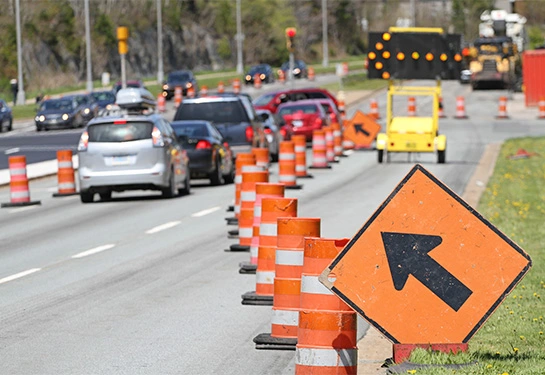
Construction zones introduce multiple simultaneous hazards: uneven pavement, loose gravel, lane narrowing, sudden speed changes, and unpredictable worker and machinery movement. They also create confusion that leads drivers to make poor decisions.
How to Protect Your Car
- Obey posted construction zone speed limits; fines are typically doubled in these areas
- Increase your following distance to allow extra stopping time on uneven or loose surfaces
- Avoid the outer lane nearest to construction activity, where loose material, kerb damage, and unmarked hazards are most common
- If your car paint gets chipped by gravel in a construction zone, treat it immediately, even small chips allow rust to begin
Final Thoughts
Road hazards are unavoidable, but the damage they cause is largely preventable. A well-maintained car handles hazards better, and a well-insured car means you’re financially protected when they do cause damage. Start with our car maintenance guide for new drivers, make sure your key safety features are functioning, and keep your insurance policy up to date. For more driving and vehicle advice, visit Ask About Cars.